
Spa SMS: clear appointment messages and client privacy

By Owen Shah
Spa SMS means text messaging around spa appointments: confirmations, reminders, rescheduling notices, service information and optional promotions. Managing
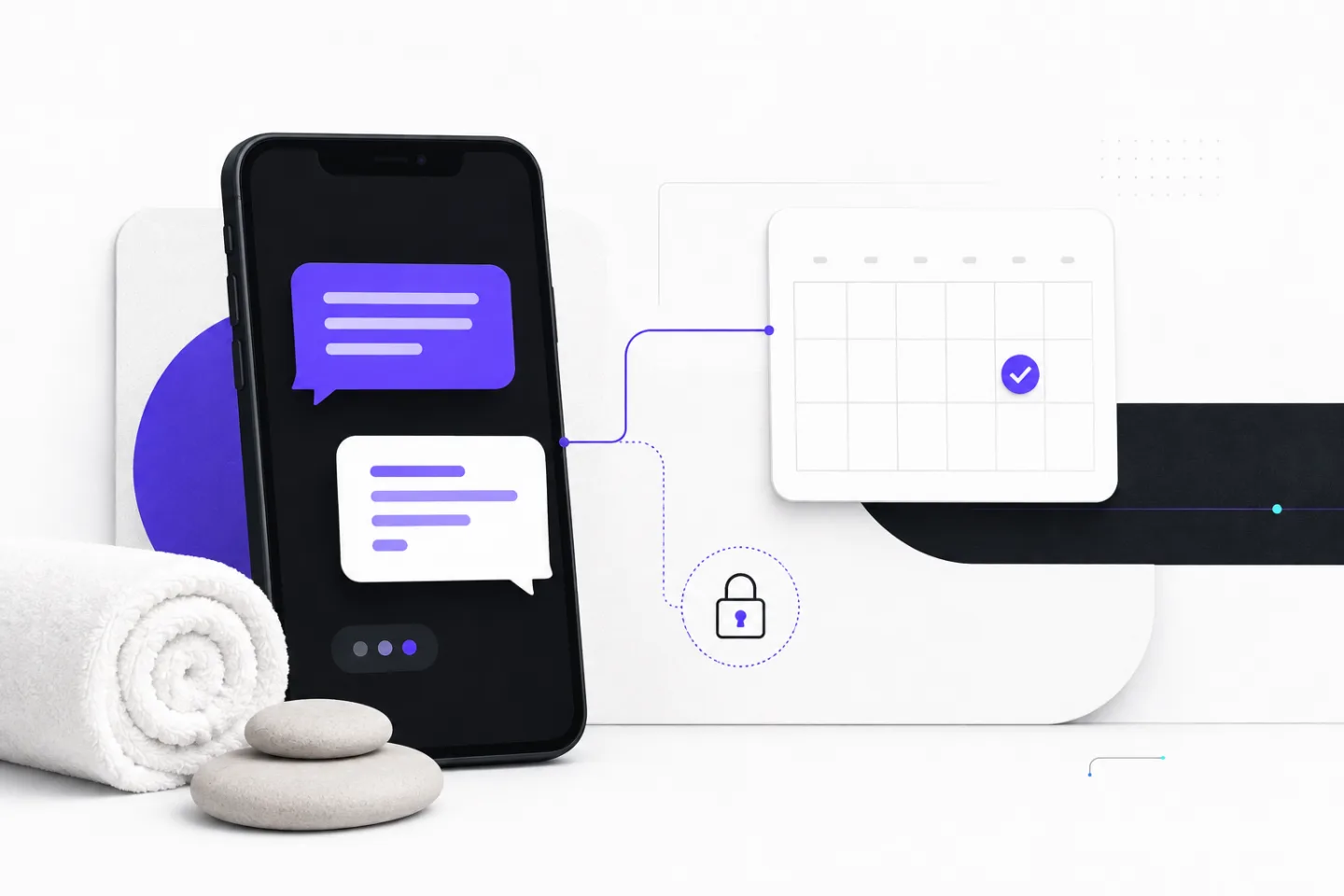
Spa SMS means text messaging around spa appointments: confirmations, reminders, rescheduling notices, service information and optional promotions. Managing these messages also means deciding how to collect mobile numbers, protect private information and handle replies. Each text should explain what is happening and what the recipient can do next.
What spa SMS usually includes
The most familiar use is a transactional message connected to an appointment. A spa may use SMS to confirm that a booking has been recorded, remind a client of an upcoming visit, acknowledge a cancellation request, or notify the client about a change. These messages are tied to an action the client has taken or to a service the client is expecting.
Another category is service information. Depending on the spa’s own process and the client’s preferences, this might include a preparation note, a post-treatment instruction, or a request to contact the business about a booking. The wording should remain proportionate to the purpose. If the message concerns a personal service, the notification should not reveal more than is necessary on a lock screen or shared device.
Promotional SMS is different. It may announce a seasonal treatment, a new service, or an invitation to return. Because it is marketing rather than a direct response to a booking, it should be handled as a separate communication choice. A person who provides a mobile number to receive appointment information has not necessarily asked to receive advertising. Separating those purposes makes the relationship easier to understand and gives the client a meaningful choice.
Government guidance on digital service design draws a similar distinction between transactional messages and subscription messages. Transactional messages respond to something a person has requested, while subscription messages should be sent only when the person has asked to receive them and should include a way to unsubscribe. GOV.UK’s guidance on planning emails and text messages provides that useful framework.
Why clarity is the central consideration
A useful spa SMS answers the immediate question before it asks the reader to do anything else. For an appointment reminder, that normally means identifying the business, stating the date and time, and explaining the next step if the client cannot attend. A message that says only “Reminder: appointment coming up” creates unnecessary uncertainty. The recipient may need to search through an email, call the spa, or open a booking system simply to discover which appointment the message concerns.
Good structure helps. Put the essential information first, use ordinary language, and separate details with line breaks when the messaging system allows it. Dates should be written in a way that reduces ambiguity. The NHS screening text-message principles recommend including the appointment date, time, location, relevant instructions, and a way to make contact. Although that document concerns screening services rather than spas, its communication principles are broadly practical: keep the message factual, concise, and easy to act on.
The call to action should match the actual process. If a client can reply to reschedule, say so. If rescheduling requires a phone call or a booking page, provide that route instead. Do not promise two-way messaging if incoming replies are not monitored. Do not invite a response to a number that cannot receive messages. Small inconsistencies like these turn a supposedly convenient reminder into another communication problem.
It is also worth considering accessibility. Not every client reads quickly, uses English as a first language, or sees a message in ideal conditions. Avoid unexplained abbreviations, decorative wording, and dense blocks of text. Spell out the information that matters. A clear message supports more people than an attempt to sound clever or luxurious.
Privacy belongs in the message design
A spa SMS may appear harmless, but a phone can be shared, displayed on a desk, or mirrored on another device. The visible preview should therefore reveal only what the recipient needs. “Your appointment is confirmed for Tuesday at 3:00 p.m. Please contact us if you need to make a change” may be sufficient. A detailed description of a treatment, a health-related concern, or a sensitive personal circumstance may be unnecessary and inappropriate for a notification.
This is especially important when a spa offers services that clients may consider private. The NHS guidance on messaging patients and service users notes that even a message containing no explicit medical detail can prompt unwelcome questions when another person sees it. A spa is not automatically subject to every healthcare rule, but the underlying privacy lesson remains sound: design the notification for the possibility that someone other than the intended reader may see the preview.
Before sending any text, the business should know why it holds the number, what kind of messages the client agreed to receive, and how a change of number or communication preference is handled. Consent and privacy requirements vary by jurisdiction and by message type, so a spa should use the rules that apply where it operates and obtain appropriate professional advice when the position is unclear. A short article cannot replace a privacy notice, a messaging policy, or local legal review.
The client should also have a straightforward way to stop unwanted messages. The opt-out route needs to work in practice, not merely appear in a policy. Staff and systems should recognise the request, update the communication preference, and avoid adding the number back through another list. If appointment-critical information still needs to reach the client, the spa should explain the available alternative channel rather than quietly continuing to text.
Keep appointment and marketing messages separate
Separating message types is one of the simplest ways to improve trust. The booking journey can explain that a mobile number may be used for appointment-related communication. A separate, optional choice can ask whether the client also wants offers or news by SMS. The two choices should not be hidden in one vague sentence or bundled into a single unavoidable permission.
The message itself should make its purpose recognisable. A confirmation should look and sound like a confirmation. A promotion should identify itself as promotional and provide the required opt-out information. Mixing an offer into a reminder can make the client wonder whether the appointment is being used as a reason to market to them. It also makes it harder for the recipient to control the type of communication they want.
Frequency should be governed by relevance and the client’s expectations, not by an arbitrary desire to remain visible. A client who has one appointment does not need a stream of unrelated messages. Promotional communication should have a defined audience, a documented permission basis, and a review process for outdated numbers or preferences. If a campaign cannot explain why each recipient should receive it, it probably needs a narrower scope.
Practical next steps for a spa
Start by mapping the communication journey from booking to follow-up. Write down every message that may be sent, its purpose, its trigger, its recipient, and the action it offers. This exposes duplicate reminders, unclear ownership, and messages that no longer reflect the booking process.
- Define the message categories. Separate confirmations, reminders, changes, cancellations, service information, and promotions. Give each category its own wording and permission logic.
- Write a small set of plain-text templates. Include the spa name, the relevant appointment detail, and a realistic next step. Keep sensitive treatment information out of the preview unless it is genuinely necessary.
- Check the data journey. Confirm where mobile numbers are collected, who can access them, how preferences are recorded, and what happens when a client opts out or updates their details.
- Test the complete interaction. Send test messages to controlled numbers, inspect the lock-screen preview, try the reply or booking link, and verify that staff can see and act on a rescheduling request.
- Review the messages periodically. Remove obsolete links, update staff instructions, and check that the wording still matches the available booking and support channels.
Spa SMS is most effective when it is treated as part of a wider communication system rather than as an isolated feature. Clear categories, restrained wording, thoughtful privacy, and dependable next steps make the experience easier to follow. The technology may be small, but the standard is the same as for any well-designed messaging channel: useful information should reach the right person, at the right moment, with enough context to support an informed action.